
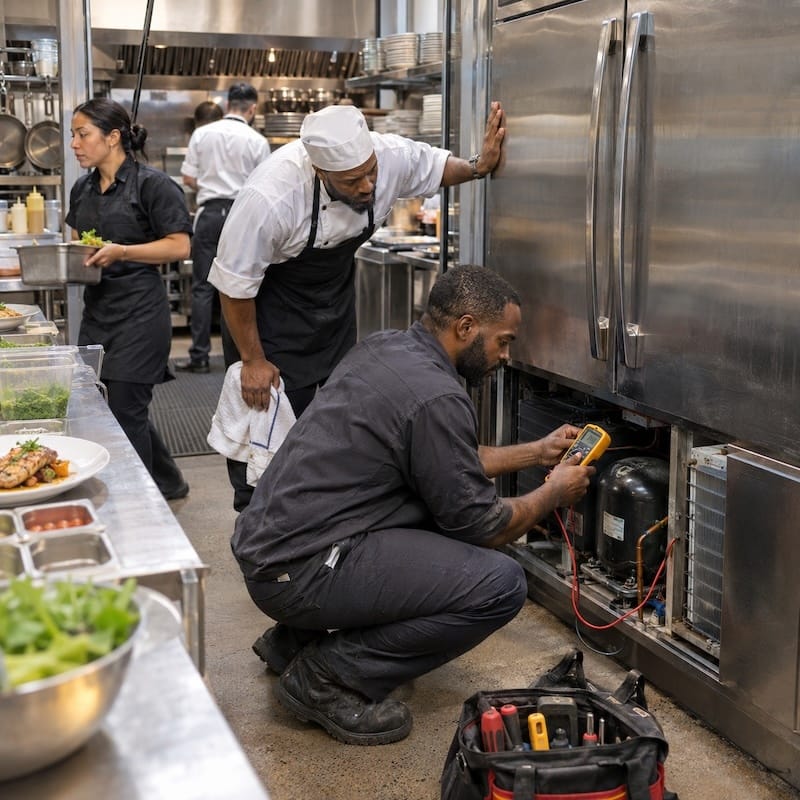
Every restaurant owner knows the sinking feeling of a critical piece of kitchen equipment going down in the middle of service. The walk-in stops cooling, the fryer quits, the dishwasher dies, and suddenly the whole operation is scrambling. Kitchen equipment downtime is one of those problems that is easy to underestimate until it happens, and then its full impact becomes painfully clear.
The truth is that equipment downtime costs restaurants far more than just the repair bill. It ripples through nearly every part of the operation, from revenue and food costs to staff morale and customer loyalty. Understanding the real impact of downtime is the first step toward taking it seriously and, more importantly, preventing it. Here is a closer look at how kitchen equipment downtime affects restaurant operations and what you can do to minimize it.
The Immediate Hit to Revenue
The most obvious impact of kitchen equipment downtime is lost revenue, and it can add up fast. When a critical piece of equipment fails, your ability to serve customers is affected. A down fryer or grill may mean you cannot prepare significant portions of your menu. A failed refrigeration unit may force you to stop serving certain items entirely. In the worst cases, a major equipment failure can shut down service altogether.
Every minute that you cannot serve customers at full capacity is revenue you are not earning, and for a restaurant operating on already thin margins, those losses are significant. A busy dinner service lost to an equipment failure represents sales that simply cannot be recovered. The timing matters too, since a failure during your busiest hours costs far more than the same failure during a slow period.This immediate revenue loss is often the largest single cost of downtime, and it is one that does not show up on any repair invoice. It is simply money that never came in!
Which Kitchen Equipment Hurts the Most When It Fails
Not all kitchen equipment failures are equal. Some pieces are so central to restaurant operations that their failure can bring everything to a halt, while others are inconveniences you can temporarily work around. Knowing which equipment carries the highest stakes helps you prioritize planned maintenance and minimize disruptions.
Refrigeration Equipment
Refrigeration is often at the top of the list because a walk-in cooler, freezer, or reach-in refrigerator failure threatens both your ability to operate and the food inventory inside it. The combination of potential food spoilage and disrupted service makes refrigeration downtime especially costly.
Cooking Equipment
Ranges, fryers, grills, and ovens are at the heart of food production. When one goes down during service, it can take a significant portion of your menu offline, slow down kitchen operations, and leave your staff scrambling to accommodate orders.
Dishwashing Equipment
Dishwashing equipment is easy to underestimate, but it’s essential to keeping a commercial kitchen running. Without a reliable way to clean and sanitize dishes, utensils, and cookware, restaurants can quickly face serious operational delays and food safety concerns.
Ventilation and Support Systems
Ventilation and other essential support systems are just as important. A malfunctioning kitchen exhaust system, for example, can create unsafe working conditions and potentially force operations to stop until the issue is resolved.
Food Spoilage and Waste
Beyond lost sales, equipment downtime frequently leads to food spoilage, which is a direct and sometimes substantial cost. This is especially true for refrigeration failures.
When a walk-in cooler or freezer goes down, the food inside is at risk. Depending on how long the unit is out and how quickly the problem is addressed, you may lose some or all of the product stored inside. For a restaurant, that can mean throwing away thousands of dollars of inventory, from proteins to produce to prepared items. And beyond the direct cost of the wasted food, there is the cost of replacing it, often on short notice and potentially at a premium.
Food safety is a related concern. Refrigeration that fails or runs warm puts food into unsafe temperature ranges, and food that has been compromised cannot be served. This protects your customers, but it also means the affected product is a total loss. The combination of spoilage and the need to discard anything that may have been compromised makes refrigeration downtime particularly costly.
The Strain on Your Staff
Equipment downtime doesn’t just affect your bottom line. It takes a real toll on your team, and that human cost is easy to overlook.
When equipment fails during service, the impact can be felt throughout your restaurant:
- Increased stress: Cooks must improvise, adjust their workflows, or work around equipment failures while trying to keep orders moving.
- Additional pressure on servers: Front-of-house employees are left explaining delays, unavailable menu items, and other service disruptions to frustrated customers.
- Reduced efficiency: Working around broken equipment slows down food preparation, increases wait times, and limits how much the kitchen can produce.
- Lower employee morale: Repeated equipment failures create frustration and make an already demanding work environment even more stressful.
- Potential burnout and turnover: Over time, constantly dealing with unreliable equipment can contribute to employee dissatisfaction and make retaining good staff more difficult.
In an industry where efficiency is essential, reliable kitchen equipment helps employees do their jobs effectively. When breakdowns become a recurring problem, the resulting strain can affect everything from productivity to service quality.
The Damage to Customer Experience
Customers notice when things are not running smoothly, and equipment downtime often translates directly into a worse experience for them. Longer wait times, unavailable menu items, and the general sense of a kitchen in disarray all affect how customers perceive their visit.
A customer who came in for a specific dish only to find it unavailable is disappointed. A customer whose order takes far longer than usual because the kitchen is working around a failure is frustrated. And in a time when a single bad experience can turn into a negative online review, the reputational cost of these moments is real. Customers who have a poor experience may not come back (and they may even tell others about it).
The relationships you build with regular customers depend on consistency. When equipment downtime causes repeated disruptions to the experience you provide, it chips away at the trust and loyalty that keep customers coming back. The long-term cost of lost customers can far exceed the immediate cost of any single equipment failure.
The Hidden Costs Add Up
When you add it all together, the true cost of equipment downtime is far greater than the repair bill that most people focus on. The lost revenue, the food spoilage, the strain on staff, the damage to customer experience, and the potential for lost repeat business all combine into a cost that can be substantial.
There is also the cost of the repair itself, which tends to be higher when it happens as an emergency. Emergency repairs, especially those needed during service or after hours, often cost more than scheduled maintenance or planned repairs. When equipment fails unexpectedly, you are at the mercy of whoever is available and how quickly they can come, which rarely works in your favor on price or timing.
All of these costs are why equipment downtime deserves to be taken seriously as an operational risk rather than treated as an occasional inconvenience. The restaurants that manage downtime well are the ones that recognize its full impact and take steps to prevent it.
How to Minimize Commercial Kitchen Equipment Downtime
The good news is that many equipment failures can be prevented, and taking a proactive approach can significantly reduce the frequency and impact of unexpected breakdowns.
Here are four practical strategies restaurant owners can use to keep their equipment running reliably.
- Establish a Planned Maintenance Schedule
Regularly scheduled maintenance helps identify minor issues before they become major problems. Routine inspections, cleaning, and servicing can improve equipment performance, extend its useful life, and reduce the likelihood of unexpected breakdowns. - Pay Attention to Early Warning Signs
Equipment often shows signs of trouble before failing completely. Unusual noises, inconsistent temperatures, longer cooking times, and changes in performance should never be ignored. Addressing these issues early can help prevent an inconvenient breakdown from becoming an expensive emergency. - Work With a Reliable Equipment Service Provider
Having a trusted repair and maintenance provider means you already know who to call when something goes wrong. Building that relationship before an emergency can help reduce response times and get your equipment back into service sooner. - Plan Ahead for Equipment Replacement
Understanding the age, condition, and expected lifespan of your equipment allows you to anticipate when replacements may be necessary. Planning ahead gives you more control over your budget and helps avoid unexpected failures during critical service periods.
Investing in planned maintenance and preparing for potential equipment issues can save restaurants significant time, money, and frustration. A proactive approach helps protect daily operations and keeps your kitchen running as smoothly as possible.
Protecting Your Operation
Equipment downtime is one of the more significant operational risks a restaurant faces, and its impact reaches far beyond the repair bill into revenue, food costs, staff, and customer loyalty. Taking it seriously and investing in prevention is one of the smarter operational decisions a restaurant can make, because the cost of prevention is almost always far less than the cost of the downtime it avoids.
At Vanco, we help restaurants keep their equipment running reliably and minimize the downtime that disrupts operations. Whether you need planned maintenance to catch problems before they start, prompt repair when something goes wrong, or guidance on keeping your kitchen running smoothly, our team understands what reliable equipment means to your operation. If you want to reduce downtime and protect your restaurant from its costly impact, we are here to help.
Frequently Asked Questions About Kitchen Equipment Downtime
What is the biggest cost of kitchen equipment downtime?
Often it is lost revenue, since being unable to serve customers at full capacity during service means sales you simply cannot recover. But downtime also brings food spoilage, higher emergency repair costs, strain on staff, and damage to customer experience. Added together, the true cost is usually far greater than the repair bill alone.
How does refrigeration downtime cause food loss?
When a cooler or freezer fails, the food inside can rise into unsafe temperature ranges and spoil, which can mean discarding thousands of dollars of inventory. Anything that may have been compromised cannot be served, so the loss is often total for the affected product.
Can kitchen equipment downtime really affect customer loyalty?
Yes. Longer waits, unavailable menu items, and disrupted service all affect how customers perceive their visit, and repeated problems chip away at the trust that keeps regulars coming back. In an era of online reviews, a bad experience can also reach a wider audience, making the long-term cost of lost customers significant.
Why are emergency repairs more expensive?
Because an unexpected failure leaves you at the mercy of whoever is available and how fast they can get to you, especially after hours. Planned maintenance is generally far more cost-effective.
How can I prevent commercial kitchen equipment downtime?
The most effective step is consistent planned maintenance, which catches small problems before they become failures. Paying attention to warning signs, having a reliable repair provider on call, and knowing the age and condition of your equipment all help as well. Most downtime is preventable with the right habits.
Is planned maintenance for my equipment really worth the cost?
Almost always. Scheduled maintenance costs far less than the combined hit of lost revenue, food spoilage, and emergency repairs that an unexpected failure brings.