
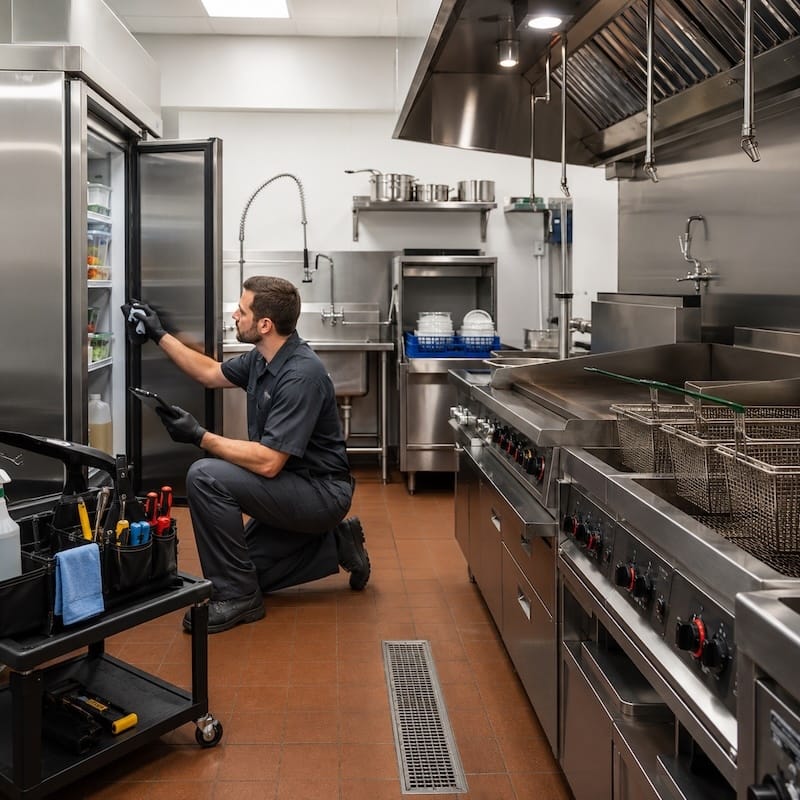
In a commercial kitchen, your equipment is the backbone of the entire operation. When it runs well, service moves smoothly and nobody thinks twice about it. When something breaks down during a busy shift, the whole kitchen feels it, and the costs pile up fast between emergency repairs, lost product, and disrupted service. The difference between those two scenarios usually comes down to one thing: maintenance.
The good news is that most equipment failures are preventable. Commercial kitchen equipment is built to work hard, but it needs regular care to keep performing reliably. A consistent maintenance routine extends the life of your equipment, reduces the frequency of breakdowns, keeps you compliant with health codes, and saves money over the long run. Here is a practical look at how to keep your kitchen equipment running the way it should.
Why Maintenance Matters More Than You Think
It is easy to treat maintenance as something you will get to when things slow down, which in a busy kitchen is essentially never. But deferred maintenance is one of the most expensive habits a kitchen can develop.
When equipment is not maintained, small issues compound. A refrigerator with dirty condenser coils works harder to stay cold, which raises energy costs and shortens the compressor’s life. A fryer that is not cleaned properly cooks less efficiently and produces lower quality food. A dishwasher with scale buildup stops sanitizing effectively, which becomes a health code problem. None of these start as emergencies, but all of them become emergencies if ignored long enough.
Regular maintenance flips the equation. Instead of reacting to failures at the worst possible moments, you catch problems early when they are cheap and easy to address. Equipment lasts longer, runs more efficiently, and fails less often. For a business where margins are already tight, that reliability translates directly into savings and smoother operations.
Build a Maintenance Schedule
The single most effective thing you can do is put maintenance on a schedule rather than leaving it to memory or chance. Different tasks need to happen at different intervals, and building them into your routine ensures nothing slips through the cracks.
- Daily: Handled by staff as part of normal operations: cleaning surfaces, wiping down equipment, emptying grease traps as needed, and checking that everything is functioning properly.
- Weekly: A bit deeper: cleaning behind and underneath equipment, descaling where needed, and inspecting components that see heavy use.
- Monthly/Quarterly: More thorough cleaning, checking seals and gaskets, calibrating temperatures, and inspecting the parts that are easy to overlook.
- Periodic: Professional service visits that keep the more complex systems in good shape.
Writing this schedule down and assigning responsibility for each task is what makes it actually happen. A maintenance checklist posted in the kitchen, with clear ownership of who does what and when, turns maintenance from a good intention into a consistent practice.
Refrigeration Equipment
Refrigeration runs constantly, which makes it both critical and prone to problems if neglected. A few maintenance habits keep it running efficiently and prevent the kind of failures that can spoil thousands of dollars of product.
- Clean condenser coils every one to three months. This is the biggest maintenance priority. When coils get coated in grease and dust, the unit has to work much harder to maintain temperature, driving up energy costs and straining the compressor.
- Inspect door gaskets regularly. When seals around refrigerator and freezer doors crack or wear out, cold air escapes and the unit runs constantly to compensate. Replace gaskets when they show cracks, tears, or gaps, and keep them clean so they seal properly and last longer.
- Check and verify temperatures. A refrigerator that drifts out of safe range is both a food safety issue and a sign that something may be wrong.
- Keep condensate drains clear to prevent water buildup and related problems.
- Leave adequate space around units so airflow isn’t restricted and the unit isn’t fighting against poor ventilation.
Cooking Equipment
Ovens, ranges, fryers, and grills take a beating in daily use, and keeping them clean and calibrated is essential for both performance and safety.
Grease buildup is the enemy of cooking equipment. Beyond affecting food quality and efficiency, accumulated grease is a genuine fire hazard. Regular, thorough cleaning of cooking surfaces, burners, and the areas around and beneath equipment reduces that risk and keeps everything performing the way it should. Fryers in particular need consistent oil management and cleaning to work well and produce quality food.
For gas equipment, keeping burners and pilot assemblies clean ensures proper ignition and efficient operation. Grease and debris around burners and pilot tubes can interfere with the flame and lead to frustrating, recurring problems. Checking that flames burn a steady blue rather than yellow or orange is a quick way to spot a combustion issue worth addressing.
Temperature calibration matters more than many operators realize. An oven that runs hotter or cooler than its setting produces inconsistent results and wastes energy. Periodically verifying that your equipment is holding the temperatures it displays keeps your food consistent and your energy use in check.
Dishwashing Equipment
Commercial dishwashers work hard and are essential for both operations and health code compliance, so keeping them maintained is not optional.
Scale and mineral buildup is the most common dishwasher problem, especially in areas with hard water. Over time, deposits accumulate on internal components and spray arms, reducing cleaning effectiveness and eventually causing damage. Regular descaling keeps the machine working properly and sanitizing effectively.
Cleaning spray arms and jets prevents clogs that lead to poor cleaning results. Checking and cleaning filters and drains keeps water flowing properly and prevents backups. Verifying that the machine reaches proper wash and rinse temperatures is essential for sanitation, since a dishwasher that does not get hot enough is not actually sanitizing dishes even if they look clean.
Ventilation and Exhaust Systems
The exhaust hood and ventilation system are easy to forget because they are overhead and out of the way, but they are critical for both safety and air quality. Grease accumulates in hoods, filters, and ductwork, and that buildup is a serious fire hazard.
Cleaning or replacing hood filters regularly is a task your staff can handle, and it makes a real difference in how well the system captures grease and smoke. The ductwork and the parts of the system you cannot easily reach require professional cleaning on a regular schedule, both for fire safety and to meet code requirements. Many jurisdictions mandate professional exhaust cleaning at specific intervals, so this is one area where staying on schedule is both a safety and a compliance matter.
Train Your Staff
Even the best maintenance schedule falls apart if the people executing it do not understand what they are doing or why it matters. Training your staff on proper equipment care is one of the most valuable investments you can make.
When staff understand how to clean equipment correctly, what to look for, and when something is not working right, they become your first line of defense against breakdowns. A cook who notices a refrigerator running warmer than usual or a burner not lighting properly can flag the issue before it becomes a failure. Building a culture where equipment care is taken seriously, and where staff feel responsible for the tools they use, pays off in fewer surprises and longer equipment life.
It also helps to keep documentation accessible. Manufacturer manuals contain specific maintenance guidance for each piece of equipment, and having that information available means your team is caring for equipment the way it was designed to be cared for rather than guessing.
Know When to Call a Professional
Plenty of maintenance is well within the reach of your kitchen staff, but some tasks require an expert technician, and knowing the difference protects both your equipment and your team.
Anything involving gas lines, electrical components, refrigerant systems, or complex mechanical repairs should be handled by professionals. These are areas where a well-intentioned attempt to fix something can create bigger problems or safety hazards. Regular professional service visits also catch developing issues that are not obvious from the outside, which is exactly the kind of early detection that prevents expensive emergency repairs.
A good approach is to pair your in-house maintenance routine with scheduled professional service. Your staff handle the daily and weekly care that keeps equipment clean and running, and an expert technician handles the deeper inspections, calibrations, and repairs that require specialized knowledge and tools. Together, that combination keeps your kitchen running reliably and your equipment lasting as long as possible.
Keeping Your Kitchen Running Strong
Maintaining commercial kitchen equipment is not glamorous work, but it is some of the most important work you can do for your business. A consistent maintenance routine keeps your equipment efficient, extends its lifespan, protects you from surprise breakdowns, and keeps you compliant with health and safety codes. The time and effort you put into maintenance is almost always less than the cost of the failures it prevents.
At Vanco, we help commercial kitchens keep their equipment running at its best. Whether you need scheduled preventive maintenance, help establishing a maintenance routine, or repair service when something goes wrong, our team understands what it takes to keep a busy kitchen operating smoothly. If you want to reduce downtime and get more life out of your equipment, we are here to help.
Frequently Asked Questions
How often should commercial kitchen equipment be professionally serviced?
A good baseline for most equipment is professional service at least twice a year, though high-use equipment or units in demanding environments may benefit from more frequent visits. Some systems, like exhaust hoods, have specific cleaning intervals that may be required by code. Your equipment manuals and a trusted service provider can help you set the right schedule for your specific kitchen.
What maintenance can my staff handle versus what needs a professional?
Your staff can handle daily and weekly cleaning, wiping down equipment, cleaning condenser coils and hood filters, descaling, and inspecting for obvious issues. Anything involving gas lines, electrical components, refrigerant, or complex mechanical repairs should be left to an expert technician, both for safety and to avoid causing further damage.
Why is cleaning condenser coils so important?
When condenser coils get coated in grease and dust, refrigeration units have to work much harder to maintain temperature. This drives up energy costs, strains the compressor, and shortens the unit’s lifespan. Cleaning the coils regularly, generally every one to three months depending on your environment, is one of the simplest and highest-value maintenance tasks you can do.
How do I know if my equipment needs repair rather than just maintenance?
Warning signs include:
- Unusual noises
- Inconsistent temperatures
- Equipment running constantly
- Longer cooking or cooling times
- Visible damage
- Anything that seems different from normal operation
Catching these signs early and addressing them promptly is almost always cheaper than waiting for a full breakdown. When in doubt, having a technician assess the issue is the safer choice.
Does planned maintenance really save money?
Yes, consistently. Fixing equipment as needed leads to higher energy bills, more frequent breakdowns, shorter equipment lifespan, and expensive emergency repairs, often at the worst possible times. The cost of planned maintenance is almost always far less than the cost of the failures it prevents, which makes it one of the better investments a kitchen can make. If you want to get ahead of those costs, schedule planned maintenance with our team.
What happens if I neglect exhaust and ventilation maintenance?
Neglected exhaust systems accumulate grease in hoods, filters, and ductwork, which creates a serious fire hazard. Poor ventilation also affects air quality and comfort in the kitchen. Many jurisdictions require professional exhaust cleaning at specific intervals, so neglecting this area can create both safety risks and compliance problems. It is one of the more important systems to stay on top of.